


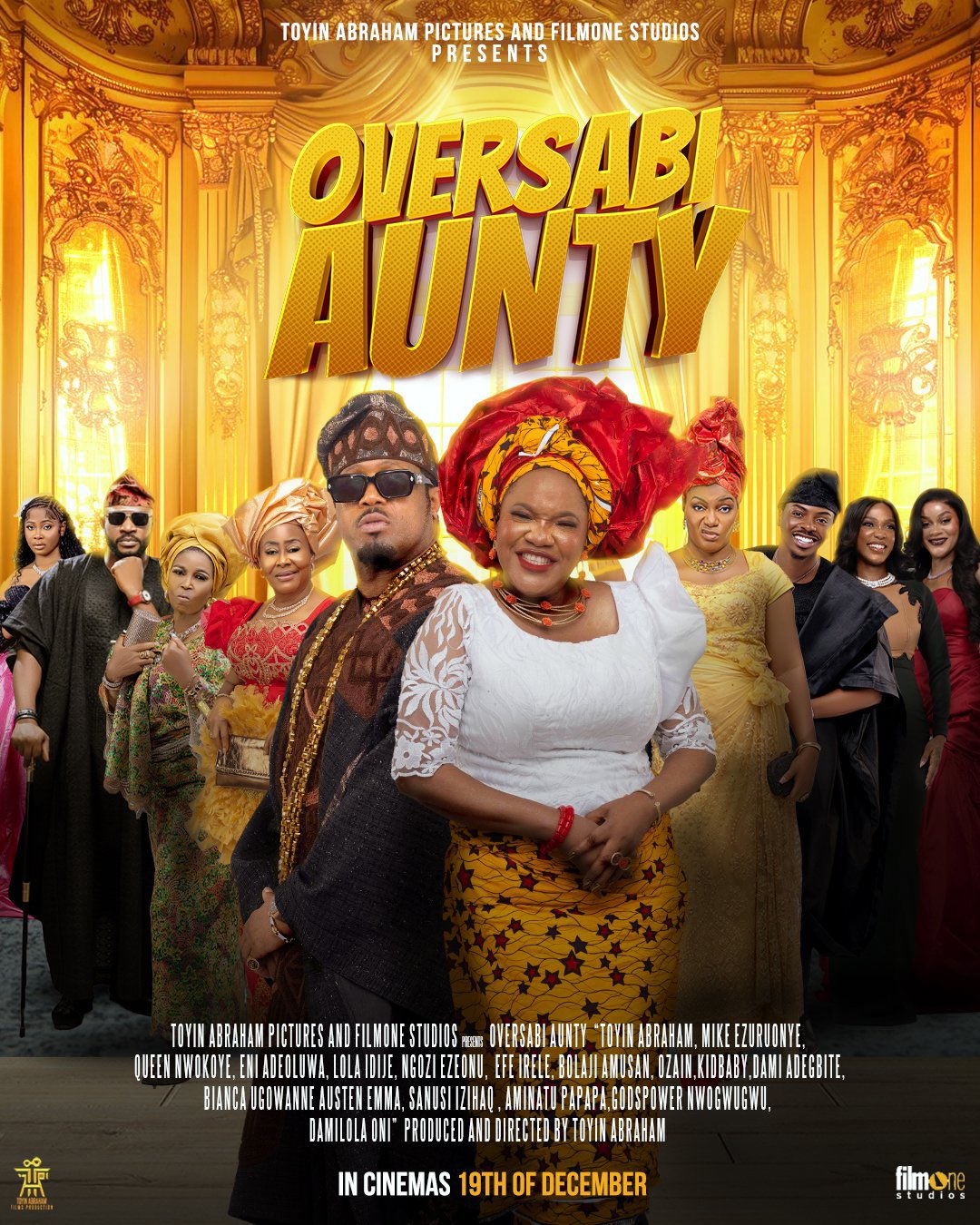
African films have always had a way of teaching lessons through storytelling. Our folktales, proverbs and even the stories our grandmothers told us under the moonlight were rarely just stories. There was almost always a lesson hidden somewhere, waiting for the child who was listening.
- What Is Oversabi Aunty About?
- Cast and Performances
- Mike Ezuruonye Is One of the Highlights
- Her Brother Is the Real Comic Relief
- Enioluwa’s Anger Didn’t Convince Me
- The Girlfriend’s Death and the Traffic Officer Scene
- Is Toun Really the Oversabi Aunty?
- What the Film Says About Parenting and Religion
- The Problem Is in the Execution
- Final Verdict and Rating
Toyin Abraham’s Oversabi Aunty is no different.
Released in cinemas on December 19, 2025, the Nigerian family comedy-drama was written and directed by Toyin Abraham, who also plays the lead character, Toun. The film explores parenting, religion, hypocrisy, marriage and cultural differences through the story of a woman who seems to know everybody’s business except what is happening inside her own home.
With its comedy, impressive visuals and some strong performances, the film has enough to keep viewers entertained. However, its execution does not always live up to the ambition of its story.
What Is Oversabi Aunty About?
At its core, the film is about Toun, a church woman who has made correcting everybody her personal ministry.
She loves to judge, advise, interfere and correct people, particularly when it comes to other people’s children. And she does all of this loudly and dramatically.
The irony, however, is that two of her own children are almost the direct opposite of the standards she works so hard to enforce on other people’s children.
This is where the comedy begins to find its footing. Toun is busy monitoring everybody around her while the problems under her own roof are gradually becoming harder to ignore.
The Yoruba-Igbo marriage between Toun and Chidi also adds another layer of cultural comedy and tension. The film uses family, language and cultural differences to create some of its funniest moments.
Cast and Performances
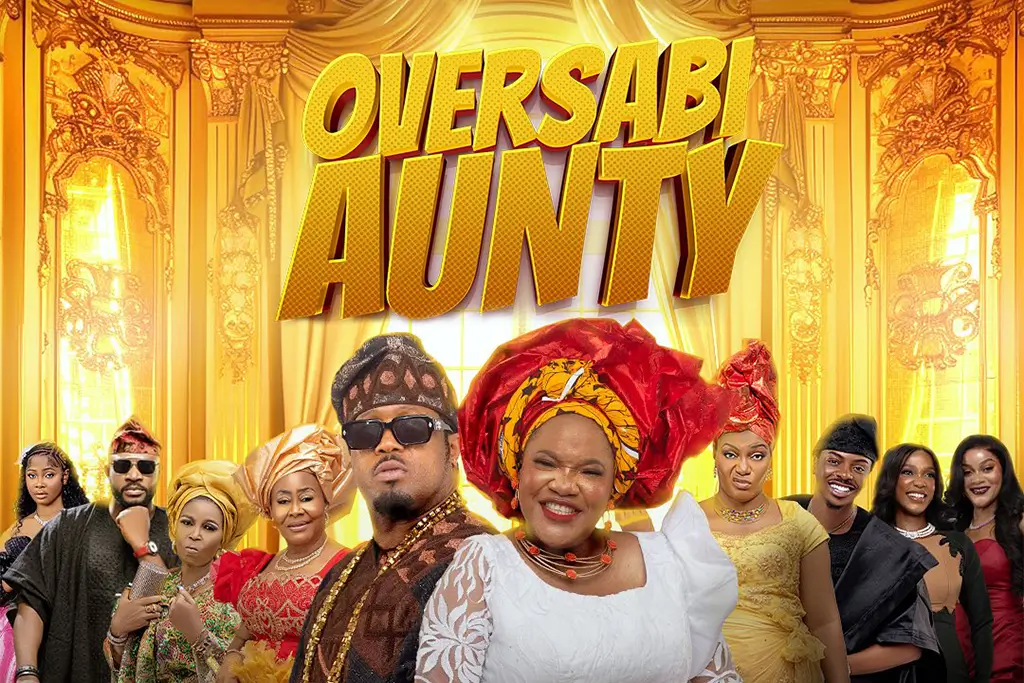
Mike Ezuruonye Is One of the Highlights
Mike Ezuruonye is an underrated actor who, in my opinion, does not always get enough credit for his acting abilities.
He knows when to be serious and when to be funny. In this film, he lights up scenes simply with his presence.
As Chidi, the husband trying to maintain his sanity in a marriage where he feels his wife has completely lost the plot, Ezuruonye understands that his character does not need to shout to be funny.
Sometimes, a facial expression, a pause or an exhausted reaction is enough.
You can see Chidi struggling to maintain his composure while dealing with a wife whose oversabi nature has become a full-time occupation. He also comes across as a man willing to endure his wife’s unnecessary attitude for the sake of keeping things together. Ezuruonye plays that restraint quite well.
Even Toyin Abraham herself praised his performance, which says something about how noticeable his contribution to the film was.
Her Brother Is the Real Comic Relief
Another performance worth mentioning is that of Toun’s brother.
He is arguably the film’s real comic relief. From the moment he barges into the bedroom, his energetic entrance sets the tone for some genuinely funny moments. His exchange with his sister, Aunty Rose, is even better.
The way they comically dig into each other’s secrets is so entertaining that it almost feels as though they are working with a telepathic script different from the one given to the other actors.
That is the kind of comedy I enjoy because it does not feel as though the actors are begging the audience to laugh. They simply exist within their characters, and the humour comes naturally.
Enioluwa’s Anger Didn’t Convince Me
But it can’t all be rosy, right?
The opening scenes are chaotic. At some point, it felt as though my head was about to reach the migraine stage. Thankfully, the chaos gradually settles, and I began to find my footing as the story progressed.
One of the things that lets the film down, however, is its scripting. The story is built around chaos, but the execution does not always know how to control it.
Then there is Enioluwa.
His performance makes me think he should perhaps avoid playing characters like this in the future. Maybe a cheerful, smooth and harmless romantic nice guy would suit him better.
But someone with serious anger issues?
I’m not convinced.
When the waitress spills water on him, he gets angry, but his reaction looks more like he is about to make an inside joke than lose his temper.
If that is what uncontrolled anger is supposed to look like, then a cat pouncing on a dog would hardly look like a territorial fight. It would look more like two animals preparing for a TikTok skit.
Even toddlers fighting to protect their toys might deliver a more convincing display of rage than what we get from a character who is supposed to have serious anger issues.
And this is where performance matters.
The character is supposed to carry a certain emotional weight, but the anger never fully translates from the actor to the viewer. You understand what the script wants you to feel, but the performance does not always make you feel it.
The Girlfriend’s Death and the Traffic Officer Scene
His girlfriend’s death also feels too easy. I still don’t think the push was convincing enough to make her fall the way she did. If her head had struck a piece of equipment before hitting the floor, for instance, the physicality of the scene might have made the accident more believable.
As it stands, I was watching and thinking, “This one no reach.”
Then there is the traffic officer scene.
It feels like an ad hoc scenario that has no real business being in the film. If it was included purely for comic relief, it did not get the reaction from me that some of the other comic scenes managed to achieve.
It felt as though the film suddenly remembered it needed another funny scene and quickly went looking for one.
Is Toun Really the Oversabi Aunty?
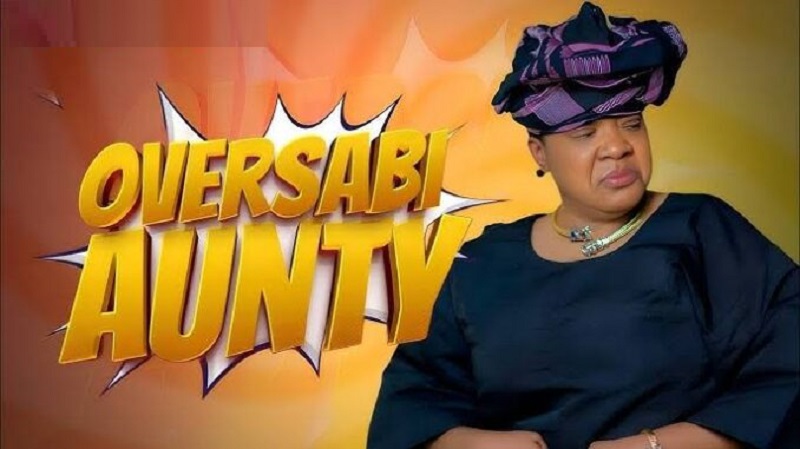
For a film built around an oversabi aunty, the character herself is sometimes missing in action.
If it were called Oversabi Mother, I probably would not be making this argument. Toun spends so much time interfering in her children’s affairs that the title would make perfect sense.
But the film sells us the idea of a woman who is perpetually interested in everybody else’s business, yet some of her actual intrusions into other people’s privacy are only mentioned rather than shown.
Aside from the church scenes and the phone call she receives concerning what is happening in her son’s room, there are moments when I genuinely want to see Toun doing the oversabi things the title promises.
Don’t just tell me that Aunty Rose is always in people’s business.
Show me the business she is getting into.
Sometimes, showing is more powerful than telling.
What the Film Says About Parenting and Religion
Still, the film’s biggest strength is the lesson sitting underneath all the noise.
As I mentioned earlier, this is a film with a lesson to teach.
Consider the cultural tension running through the story, particularly the relationship between a Yoruba mother and an Igbo father, and how both families eventually come together around a wedding.
The film uses family, language and cultural differences to create comedy. Beneath all that, however, is a simple message: people can be different without having to become enemies.
In a country where ethnic and religious differences can quickly become ammunition, that message is not entirely useless.
Toun’s biggest problem, however, is not that she is religious.
It is that she has confused religion with control.
She spends so much time correcting other people that she fails to pay enough attention to the children under her own roof. She is a mother, but she is also so heavily invested in religion that almost every problem requires a mountain of prayers, candlelight and divine intervention before she considers any practical solution.
But what about the earthly mother?
The woman whose responsibility is to listen to her children, understand them and intervene when necessary?
This is where the film becomes bigger than its comedy.
It almost becomes a satire of a society where we sometimes pray about problems we should be actively solving.
It reminds me of Nigeria in a rather uncomfortable way.
We can spend hours praying for revival while ignoring the machines, systems and institutions that could actually improve people’s lives. We can distribute small pieces of the national cake while the bigger pieces mysteriously disappear into the mouths of monkeys and snakes.
Prayer is important to many Nigerians, but the film seems to ask an uncomfortable question:
At what point does prayer become an excuse for refusing to do the work?
Chidi, Patience and the Cost of Endurance
And then there is Chidi.
The man perseveres. He absorbs. He manages. He tolerates. He tries to keep the family together while his wife is busy policing everybody else’s morality.
But even patience has an expiry date.
You can only endure so much before the things you have been quietly carrying begin to collapse under their own weight.
One of the things I took away from the film is that peace will always be better than unnecessary tantrums. Listening to people before correcting them might also save you from cleaning up a mess your own mouth helped create.
The Problem Is in the Execution
The film is not without ambition. In fact, I think the intention behind it is stronger than some aspects of its execution.
It wants to be funny. It wants to talk about parenting. It wants to discuss faith, address hypocrisy, explore cultural differences and give us a family drama.
That is a lot of food in one pot.
Sometimes, you can taste everything but still wonder what the actual soup is supposed to be.
Oversabi Aunty teaches. It entertains. It has some genuinely funny moments and performances that help hold its weaker parts together.
But its biggest problem is that the execution occasionally betrays the intention.
The script knows the destination; it just does not always know the smoothest road to get there.
Final Verdict and Rating
Be that as it may, I did not leave the cinema feeling as though I had wasted my time.
I left thinking about how many Nigerian homes have a Toun: someone who knows everybody’s problems, everybody’s children’s problems and everybody’s marriage problems, but somehow misses the person sitting right beside them at home.
And maybe that is the real oversabi.
Not knowing too much.
Knowing too much about everybody else while knowing too little about the people closest to you.