

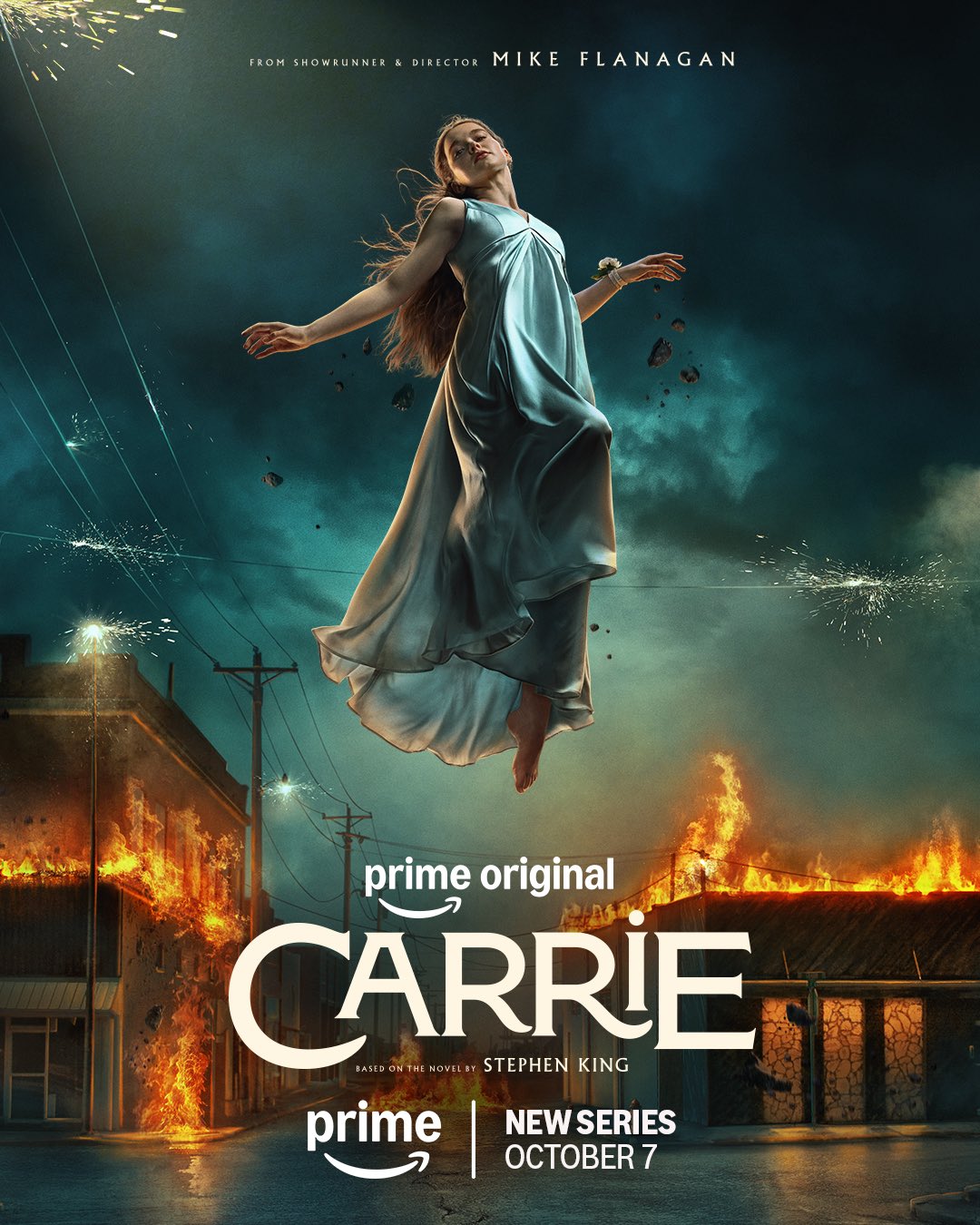
Mike Flanagan’s Carrie is more than another adaptation of Stephen King’s horror classic. It is a story about bullying, religious extremism, female independence and what happens when the people who should protect you become the very people you need protection from.
I have never been the biggest fan of urban witch stories. No matter how impressive the visuals are or how interesting the world-building gets, I often find myself wanting something more. There is usually a missing piece, something that should make the supernatural feel personal but somehow never quite does.
- Is Mike Flanagan’s Carrie Worth Watching?
- Reimagining Stephen King’s Carrie for a New Generation
- Sue Snell and the Danger of Following the Crowd
- Margaret White: When Religion Becomes a Tool of Control
- Carrie White, Female Power and the History of Persecuting Women
- Summer H. Howell’s Carrie Is More Than a Girl With Powers
- Why This Carrie Feels Different From Earlier Adaptations
- Final Verdict: Does Carrie Have a Soul?
Perhaps I have been too demanding. Salem and Luna Nera set the bar for me, and ever since, I have struggled to find other stories in the genre that genuinely hold my attention. Motherland: Fort Salem came close, while A Discovery of Witches showed that supernatural storytelling could offer more than spells, strange creatures and beautiful cinematography.
Then came Carrie.
I did not expect to be this invested in it. More surprisingly, I did not expect a story I already knew to give me so much to think about.
Is Mike Flanagan’s Carrie Worth Watching?
When I first watched the trailer, I assumed I was looking at a psychological drama. The opening minutes did little to change that impression. I expected a tense story about a troubled young girl, perhaps the kind of performance that would have people discussing awards before the year was over.
Summer H. Howell seemed perfectly positioned to deliver that kind of performance.
Then the stones started falling from the sky.
At that point, I realised this was not going to be the straightforward psychological drama I had imagined. The supernatural elements were not an afterthought, and the story was heading somewhere considerably darker.
What interested me most, however, was not the discovery of Carrie’s powers. It was what the series chose to do with the person behind them.
Because, honestly, a girl with telekinetic abilities is only as interesting as the world that pushes her to use them.
Reimagining Stephen King’s Carrie for a New Generation
Adapting Carrie comes with a peculiar challenge: the story has already been told several times.
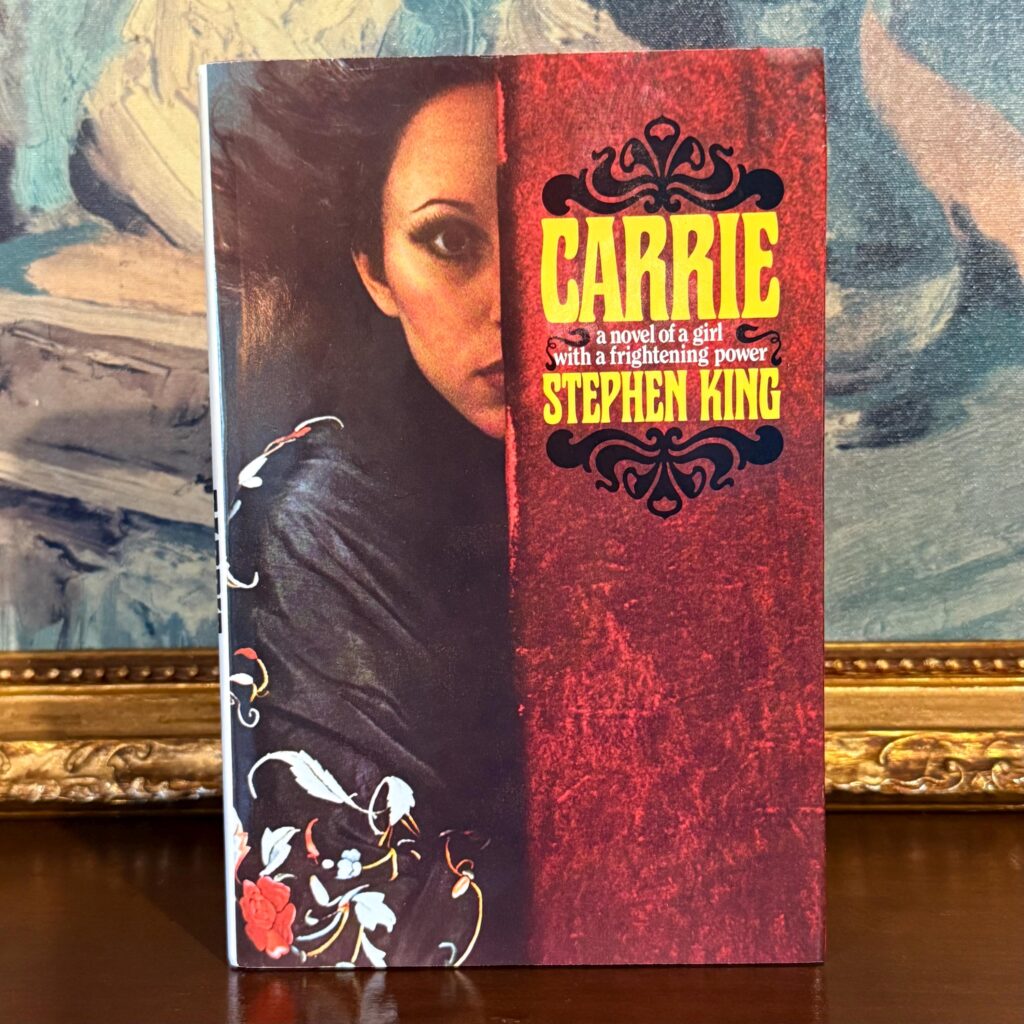
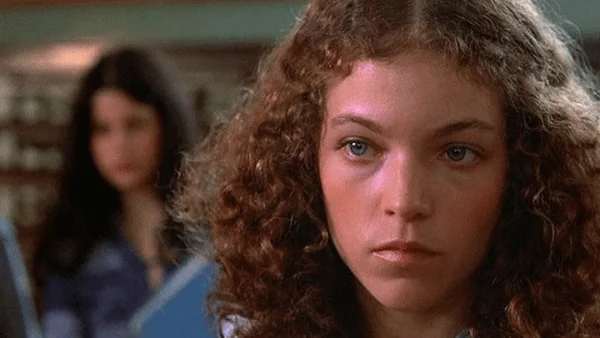
Stephen King’s 1974 novel introduced readers to Carrie White, a bullied teenager whose extraordinary powers become entangled with years of abuse, humiliation and religious oppression. Brian De Palma’s 1976 film, starring Sissy Spacek, remains an important part of horror history, while subsequent adaptations have offered their own interpretations of the same tragic story.
So, what exactly can another version bring to the table?
For me, the answer lies in understanding that the world Carrie lives in today cannot be identical to the one audiences encountered decades ago.
Bullying has not disappeared. If anything, technology has made it easier for cruelty to follow its victims long after the school bell rings. A humiliating moment that once ended when a student left the classroom can now be recorded, shared, replayed and discussed by strangers.
That changes the experience of being publicly shamed.
Mike Flanagan’s approach creates an opportunity to examine how an old story can speak to a different generation without losing the qualities that made it compelling in the first place. Rather than treating the supernatural as the only source of horror, the series draws attention to the everyday cruelty that can make a person feel like a monster long before anyone sees their powers.
And that, to me, is where Carrie becomes more than a familiar horror story.
Sue Snell and the Danger of Following the Crowd
Siena Agudong’s portrayal of Sue Snell offers one of the more recognisable human experiences in the series: the struggle between doing what is right and remaining accepted by the people around you.
Sue is not necessarily someone who wakes up intending to ruin another person’s life. Her problem is more complicated than that. She is influenced by her friends, their expectations and the unspoken pressure to remain on the right side of her social circle.
We have all encountered people like Sue.
They may not be the ones who initiate the cruelty, but they are willing to stand by while it happens. Sometimes, they even participate because challenging the group would mean risking their own position within it.
This is what makes Sue’s character worth examining. There is a difference between being a genuinely cruel person and being someone who allows cruelty to continue because standing up for another person feels inconvenient.
Of course, recognising that distinction does not excuse her behaviour.
Good intentions do not erase the consequences of our actions, and refusing to speak up can still make us part of the problem. What matters is whether a person eventually becomes willing to confront their own complicity.
Sue’s growing willingness to question the people around her gives her character room to develop. It also raises an uncomfortable question: how many people would actually defend someone being mistreated if doing so meant losing the approval of their friends?
That is a far more interesting question than whether Sue is simply good or bad.
Margaret White: When Religion Becomes a Tool of Control
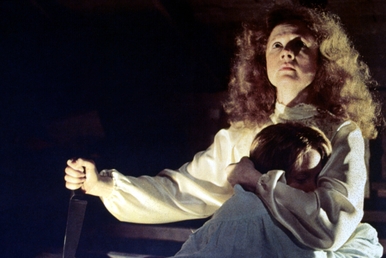
If there is one character whose presence makes Carrie’s situation especially disturbing, it is her mother, Margaret White.
Played by Samantha Sloyan, Margaret represents the danger of religious conviction when it becomes inseparable from control, fear and the refusal to recognise another person’s humanity.
Under her authority, ordinary bodily experiences become shameful, curiosity becomes sinful, and independence becomes evidence of disobedience. Carrie is not given the freedom to discover who she is. Instead, she is taught to fear the very things that might help her understand herself.
What makes Margaret frightening is that she does not necessarily see herself as the villain in her daughter’s story.
She believes in what she is doing.
And that is precisely the problem.
There is something deeply unsettling about a person who can inflict harm while remaining convinced that their actions are justified. When that person also has parental authority, the damage becomes even more difficult to escape.
Sloyan understands this well. Her performance does not depend entirely on shouting, dramatic outbursts or exaggerated displays of anger. Much of Margaret’s menace comes from the certainty with which she expresses her beliefs.
She does not simply want Carrie to behave a certain way. She wants to determine how Carrie thinks, what she fears, what she believes and what she is allowed to become.
For me, Margaret is responsible for a substantial part of the suffering that shapes Carrie’s life. It is difficult not to wonder how differently Carrie might have developed if her home had offered safety rather than another place where she had to be afraid.
A mother should not have to be perfect to protect her child. But protection requires recognising that a child is a person, not property.
Margaret’s tragedy is not simply that her beliefs are extreme. It is that she allows those beliefs to take precedence over her daughter’s well-being.
The person who should have been Carrie’s first refuge becomes one of her greatest sources of suffering.
Carrie White, Female Power and the History of Persecuting Women
One of the most interesting things about Carrie’s story is the relationship between female power and the fear it can inspire.
Carrie is a young woman whose body, emotions and abilities are treated as problems to be controlled. Her powers make that struggle literal, but the underlying conflict is familiar: who gets to decide what a woman is allowed to be?
History offers disturbing examples of women being punished for stepping outside the boundaries imposed on them by society. The European witch hunts and the Salem witch trials of 1692 remain powerful reminders of what can happen when fear, religious authority and social suspicion combine.
The historical circumstances were not identical to Carrie’s situation, but the thematic connection is difficult to ignore.
Women who challenged established expectations could be labelled dangerous, immoral or threatening. Their perceived differences became reasons to isolate, condemn or punish them.
Carrie’s powers give this fear a supernatural dimension. Yet the deeper question is not simply why people fear what she can do. It is why they feel entitled to control her in the first place.
Her struggle for freedom is complicated by the fact that the people around her do not always recognise her right to make decisions about her own life.
This is where the horror becomes particularly effective. Carrie’s abilities are extraordinary, but the desire to control her is painfully ordinary.
Summer H. Howell’s Carrie Is More Than a Girl With Powers
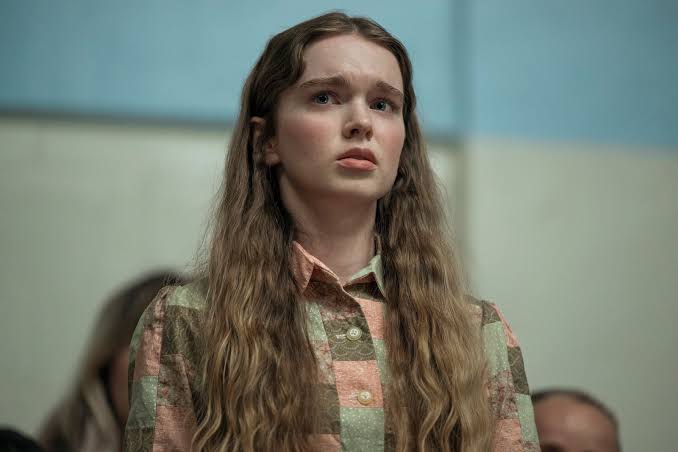
Summer H. Howell has a difficult character to portray.
Carrie White is not simply a frightened teenager who discovers she can move objects with her mind. She is a young person navigating isolation, humiliation, confusion and the desire to experience the acceptance that other teenagers seem to find so easily.
To make Carrie believable, an actor must communicate the person beneath the supernatural spectacle.
Her vulnerability matters. Her anger matters. So does the part of her that wants to believe things could be different.
Without those emotional layers, the story risks becoming little more than a sequence of increasingly destructive events.
What makes Carrie compelling is the tension between her desire to belong and the circumstances that repeatedly teach her that she does not. She wants connection, but the people around her give her reasons to distrust it. She wants some measure of independence, but her home life makes that independence difficult to claim.
Her powers may set her apart from everyone else, but her emotional needs are recognisable.
That is the contradiction at the heart of Carrie White: she possesses abilities that make her extraordinarily powerful, yet she remains vulnerable to the same rejection and cruelty that affect countless ordinary teenagers.
Howell’s interpretation gives the character room to exist beyond the shadow of previous performances. Rather than expecting a new Carrie to reproduce what audiences remember from earlier adaptations, it is more useful to consider how this version fits the world in which her story is being told.
A remake does not have to erase its predecessors to justify its existence. It has to give audiences a reason to engage with the material again.
Why This Carrie Feels Different From Earlier Adaptations
Comparisons between adaptations are inevitable, particularly when the original story has such a recognisable place in popular culture.
However, comparing a television series with a feature film without considering their different formats can lead to an incomplete assessment.
An eight-episode structure gives supporting characters more room to develop, allows relationships to unfold in greater depth and creates opportunities to examine the circumstances that shape the central character.
It also allows the story to approach its familiar themes from different angles.
That matters because Carrie’s tragedy is not built around one isolated incident. It emerges from a series of experiences, decisions and relationships that gradually shape her understanding of herself and the world around her.
The modern context matters, too.
Today, humiliation can become permanent digital evidence. A person’s worst moment can be circulated far beyond the people who witnessed it, while the person at the centre of the humiliation may have little control over how the story is told.
For a character already struggling with rejection, that possibility adds another layer to the experience of being exposed and ridiculed.
The most effective adaptation is not necessarily the one that changes the most. It is the one that understands which parts of the original story remain relevant and how to present them in a way that resonates with contemporary audiences.
Final Verdict: Does Carrie Have a Soul?
I went into Carrie expecting another supernatural story that might look impressive without giving me much to hold on to emotionally.
I was wrong about what I was getting.
What stayed with me was not simply the horror or the supernatural spectacle. It was the way the story connected those elements to recognisable human experiences: the need for acceptance, the pressure to conform, the damage caused by shame and the consequences of allowing fear to govern how we treat other people.
Sue’s struggle with complicity, Margaret’s suffocating control and Carrie’s desire to escape the life imposed on her all contribute to a story that has something meaningful to say beyond its supernatural premise.
That does not mean every adaptation of Carrie must be judged a masterpiece, nor does it mean familiar material automatically becomes compelling because it addresses serious themes. Execution still matters. Character development still matters. And audiences are entitled to expect more than a recognisable title attached to a new production.
But there is a difference between retelling a story because people remember it and retelling it because there is still something worth exploring.
For me, that difference is what makes this version worth discussing.
I have spent years being difficult to impress when it comes to urban witch stories. Carrie reminded me that the supernatural does not have to compete with human emotion for a story’s attention. When the two work together, each can make the other more powerful.
Perhaps the real horror was never just what Carrie could do.
Perhaps it was what people did to her before they ever had a reason to fear her.
And that is the sort of story that stays with you long after the screen goes dark.
You would love: Is 28 Years Later the Scariest Horror in 2025?